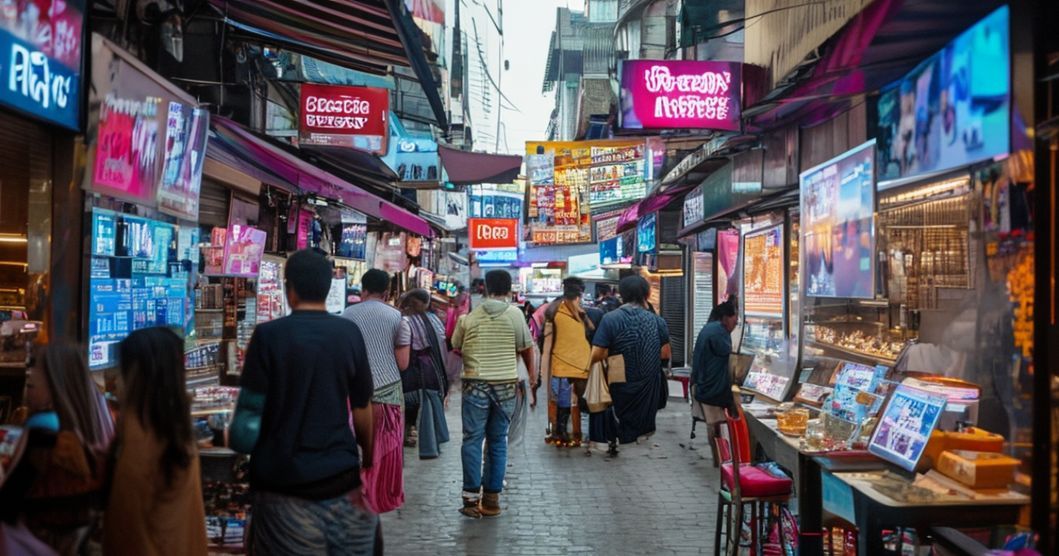
The Indian economic landscape is perpetually dynamic, a vibrant tapestry woven with tradition and innovation. As we navigate 2026, a significant trend has solidified its position at the forefront of marketing strategies: the hyperlocal imperative. In an era dominated by rapid e-commerce expansion and global brands, the resurgence of local businesses, empowered by smarter, more engaging strategies, is not just a trend but a foundational shift.
Consumers today seek convenience, community, and personalized experiences. While online shopping offers unparalleled ease, the desire for tangible interactions, immediate gratification, and supporting one's local community remains deeply ingrained. This dual demand has given rise to the 'phygital' revolution, where the physical and digital worlds seamlessly merge to create enriched customer journeys, especially at the hyperlocal level.
The Hyperlocal Imperative in 2026: Why Local Matters More Than Ever
For years, the narrative often pitted online against offline. However, 2026 sees a more sophisticated understanding: they are complementary. Local businesses, from the neighborhood kirana store to the trendy cafe and the specialized salon, are the bedrock of India's economy. Their resilience and adaptability are now being amplified by targeted hyperlocal strategies.
The drivers behind this imperative are manifold:
- Consumer Convenience and Instant Gratification: The quick-commerce boom has conditioned consumers to expect products and services almost instantly. Local businesses, by their very nature, are best positioned to fulfill this demand for immediate access.
- Community Connection: People inherently trust and prefer businesses that are part of their local fabric. Hyperlocal strategies foster a sense of belonging and loyalty.
- Escalating Competition: With both national chains and online giants vying for attention, local businesses must differentiate themselves not just by product but by experience and connection.
- Government Initiatives: Programs like 'Vocal for Local' continue to foster a supportive environment for homegrown businesses, encouraging consumers to patronize local vendors.
Bridging the Gap: The Phygital Revolution for Local Businesses
The 'phygital' approach is transforming how local businesses interact with their customers. It's about leveraging digital tools to enhance physical spaces and experiences, making offline marketing measurable, engaging, and personal. No longer is offline advertising a shot in the dark; modern solutions are bringing the precision of digital to the real world.
Consider a typical Indian market street. A few years ago, advertising was limited to static hoardings or flyers. Today, digital screens inside shops and cafes are becoming commonplace. These screens aren't just displaying generic ads; they are becoming interactive touchpoints, offering localized content, real-time promotions, and even games that reward customer engagement. This transforms a passive viewing experience into an active interaction, making the ad less intrusive and more relevant.
QR codes, for instance, are experiencing a renaissance. Placed strategically within physical spaces, they can instantly connect customers to online menus, loyalty programs, special discounts, or engaging mini-games. This seamless transition from physical discovery to digital action is the essence of phygital marketing, empowering local businesses to collect valuable data and personalize future interactions.
Beyond Proximity: Deepening Local Customer Engagement
Successful hyperlocal strategies in 2026 go beyond simply having a physical presence. They focus on creating memorable experiences that foster deep engagement and loyalty. This involves:
- Personalized Offers: Using insights gathered from phygital interactions, businesses can offer highly relevant discounts or product recommendations.
- Interactive In-Store Experiences: Digital screens that allow customers to play a 'spin-to-win' game for discounts, participate in a quick poll, or simply browse extended product catalogs.
- Community Events and Partnerships: Collaborating with other local businesses for joint promotions or hosting small community events within the physical space.
- Feedback Loops: Making it easy for customers to provide instant feedback through digital channels linked in-store, showing that their voices are heard and valued.
Data-Driven Local Marketing: Making Offline Measurable
One of the historical challenges of offline advertising was its elusive measurability. Brands invested heavily without clear metrics on ROI. However, the hyperlocal revolution of 2026 is fundamentally changing this. Modern advertising technology, distinct from AI in ad delivery, is now enabling robust tracking and analytics for offline campaigns.
Brands can now track how many times an ad was played on a specific screen, how many customers scanned a QR code, the cost per acquisition (CPA) from an offline campaign, cost per impression (CPI), and even cost per mille (CPM). This level of data empowers businesses to optimize their campaigns in real-time, just like their digital counterparts. It allows for A/B testing of creatives in different localities, understanding which messages resonate most effectively with specific demographic clusters, and ultimately, making every marketing rupee work harder.
Challenges and Opportunities for Indian MSMEs
While the opportunities are vast, Indian Micro, Small, and Medium Enterprises (MSMEs) also face unique challenges. Budget constraints, lack of specialized marketing knowledge, and the perception that advanced marketing tools are only for large corporations can be daunting. However, the evolving ad-tech landscape is increasingly democratizing access to sophisticated marketing solutions.
For MSMEs, the key is to embrace solutions that are affordable, easy to implement, and provide clear, actionable insights. The ability to launch campaigns quickly, track performance transparently, and engage customers interactively without breaking the bank is crucial for their growth and survival in a competitive market.
Conclusion: Seizing the Hyperlocal Advantage in 2026
The Indian market in 2026 is unequivocally moving towards a future where local relevance and engaging customer experiences are paramount. Brands that understand and leverage the power of hyperlocal strategies, blending the best of physical presence with digital engagement, are poised for significant growth. The focus is no longer just on reaching customers, but on deeply connecting with them in their immediate environment, making every interaction count.
For businesses looking to capitalize on this hyperlocal wave and make their offline presence truly measurable and impactful, platforms like Adsmunch are revolutionizing the landscape. As India's first automated hyperlocal offline advertising platform, Adsmunch empowers brands to launch targeted campaigns inside real commercial spaces like shops, cafes, gyms, and salons. With our advertiser app/dashboard, campaigns can be launched in 10-15 minutes, offering full metrics like plays, scans, CPA, CPI, and CPM – bringing digital-like measurability to offline advertising. Our platform is 100% Indian, built for Indian businesses, affordable (starting at ₹23.75/hour), and crucially, uses automation and data analytics to deliver results, making ads engaging for consumers through rewards and games, not intrusive. Adsmunch is driving the next generation of offline marketing, ensuring your brand isn't just seen, but truly connected with its local audience.