In a world saturated with digital noise, where ad blockers and banner blindness are the norm, Indian brands are increasingly seeking innovative ways to capture consumer attention. The year 2026 marks a pivotal moment, as the focus shifts from purely digital campaigns to a powerful blend of the physical and digital – a phenomenon widely dubbed 'phygital' marketing. This isn't just a buzzword; it's a strategic imperative, especially for a diverse and rapidly evolving market like India.
For years, marketers have grappled with the elusive goal of creating truly engaging advertising. While digital platforms offer unparalleled targeting and measurability, they often lack the tactile, immersive experience that physical interactions provide. Conversely, traditional offline advertising, though impactful, historically struggled with real-time data and agility. Today, the trending discussion among Indian business leaders is how to bridge this gap, creating seamless, interactive journeys that resonate deeply with consumers.
The Digital Dilemma: Cutting Through the Clutter
India's digital landscape is vibrant, with hundreds of millions of internet users. However, this vibrancy comes with its own set of challenges. Consumers are bombarded with ads on every screen – social media feeds, websites, streaming platforms. The result is often digital fatigue, where ads are scrolled past, ignored, or actively blocked. Brands, despite investing heavily, find it harder to achieve genuine engagement, stand out from competitors, and build lasting relationships.
Privacy concerns are also growing, leading to stricter data regulations and a decline in third-party cookie effectiveness. This necessitates a re-evaluation of purely digital strategies, pushing brands to explore new frontiers where trust and authentic interaction can be fostered. The search for 'new' channels that offer both reach and relevance, without being intrusive, has become paramount.
The Resurgence of Offline, Reimagined
This isn't a retreat from digital, but rather an evolution. Savvy Indian brands are realizing the untapped potential of physical spaces – the local shops, cafes, gyms, and salons where daily life unfolds. These are environments where consumers are often relaxed, receptive, and actively engaged in their surroundings. The key is to transform these traditional offline spaces into dynamic touchpoints for modern, interactive advertising.
The comeback of offline isn't about static posters or billboards; it's about integrating digital interactivity into physical environments. Think interactive screens, QR code campaigns that lead to instant rewards, augmented reality experiences in stores, or personalized offers triggered by proximity. This reimagined offline approach harnesses the power of digital technology to amplify physical presence, creating a richer, more memorable brand experience.
What is Phygital Marketing and Why it Matters in India?
Phygital marketing seamlessly integrates the physical and digital worlds to create a unified customer journey. It’s about leveraging technology to enhance physical interactions, making them more convenient, personalized, and engaging. In the Indian context, this holds immense significance due to several factors:
Firstly, India’s diverse consumer base thrives on community and personal connection. Physical spaces are central to social interactions and purchasing decisions. Integrating digital elements into these trusted environments can enhance, rather than detract from, the experience.
Secondly, with the widespread adoption of smartphones and digital payment platforms like UPI, Indian consumers are highly comfortable with mobile-first interactions. A QR code on a screen in a local shop, leading to an instant discount or a spin-to-win game, feels natural and rewarding, not intrusive.
Thirdly, the 'touch and feel' aspect remains crucial for many Indian consumers, especially for certain product categories. Phygital strategies allow brands to combine the sensory experience of a physical location with the information richness and interactive capabilities of digital platforms.
Innovations Driving Offline Engagement
The innovations making phygital marketing a reality are diverse and growing. Here are some key examples:
1. Interactive Digital Screens: No longer passive displays, these screens in commercial spaces can run dynamic ads, offer instant polls, or provide real-time information. Consumers can interact via touch or their smartphones.
2. QR Code Integration: QR codes are the bridge between the physical ad and the digital engagement. Scanning a code can lead to exclusive coupons, loyalty program sign-ups, contests, or detailed product information.
3. Gamification in Physical Spaces: Brands are introducing games and challenges in physical locations, often linked to digital platforms, to boost engagement and footfall. These can be simple spin-to-win games or more elaborate scavenger hunts.
4. Personalized Experiences: Leveraging data analytics, brands can deliver contextually relevant messages and offers on screens in specific locations at opportune times, making the ad feel less like an intrusion and more like a helpful suggestion.
5. Augmented Reality (AR): While still nascent, AR experiences in physical stores allow consumers to virtually try on clothes, visualize furniture in their homes, or interact with product demonstrations through their phone cameras.
These innovations transform mundane waiting times or shopping trips into opportunities for delightful brand interaction, fostering a positive perception and driving measurable actions.
Measurability and Impact: The Phygital Advantage
One of the biggest historical drawbacks of offline advertising was its perceived lack of measurability. Phygital marketing shatters this barrier. By integrating digital touchpoints, brands can now track a wealth of data points that were once exclusive to online campaigns.
For instance, tracking QR code scans provides direct insights into consumer interest and action. Digital screens can report ad play counts, duration, and even estimated viewership (through anonymized data analytics). By linking these interactions to online conversions or in-store purchases, brands can calculate crucial metrics like Cost Per Acquisition (CPA) or Return on Ad Spend (ROAS) for their offline campaigns. This data-driven approach allows for real-time optimization, ensuring marketing budgets are spent effectively and efficiently.
The impact extends beyond mere numbers. Engaging phygital experiences lead to higher brand recall, improved customer loyalty, and valuable word-of-mouth marketing. In a competitive market like India, where consumer trust is paramount, providing transparent, rewarding, and interactive experiences builds stronger connections.
Embracing India's Phygital Future
As India's market evolves, embracing the phygital future is no longer an option but a necessity. For businesses looking to tap into this powerful trend, platforms like Adsmunch offer a groundbreaking solution. Adsmunch, India's first AUTOMATED hyperlocal offline advertising platform, empowers brands to launch measurable campaigns inside real physical commercial spaces across the country. Through digital screens hosted by local shops, brands can connect with consumers in their immediate environment, offering engaging content and interactive rewards.
With real-time tracking of plays, scans, CPA, CPI, and CPM, Adsmunch makes offline advertising as measurable as its digital counterparts, all powered by automation and sophisticated data analytics – not AI in ad delivery. It's an affordable, engaging, and highly effective way to build brand presence and drive consumer action, turning local shops into dynamic ad touchpoints. By making offline advertising interactive and fully trackable, Adsmunch is at the forefront of India's phygital revolution, offering a truly innovative way to bridge the gap between the physical and digital, and redefine consumer engagement for the modern Indian market.
Back to All Blogs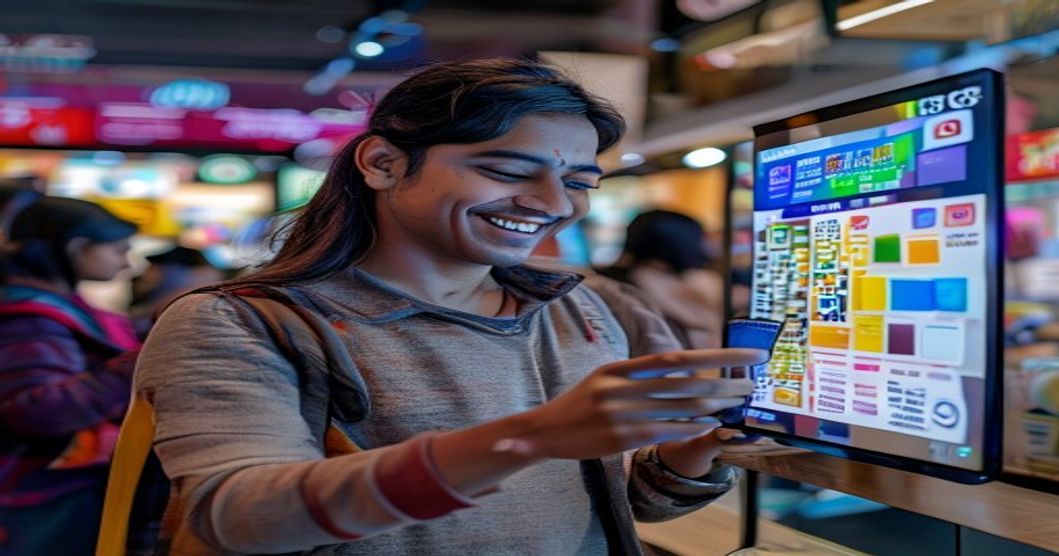
India's Phygital Edge: Redefining Offline Ads for Max Engagement
Published by Adsmunch AI
Marketing Channel Comparison: Traditional vs. Digital vs. Phygital
| Aspect | Traditional Offline (e.g., Billboards) | Digital (e.g., Social Media Ads) | Modern Phygital Offline (e.g., Adsmunch Screens) |
|---|---|---|---|
| Reach | Broad, untargeted geographic | Global, highly targeted demographics | Hyperlocal, targeted by location type/time |
| Engagement | Passive viewing, low interaction | Clicks, likes, shares, comments | Interactive scans, reward-driven games, physical interaction |
| Measurability | Low (e.g., footfall estimates, surveys) | High (impressions, clicks, conversions, ROI) | High (plays, scans, CPA, CPI, CPM, real-time analytics) |
| Cost Structure | High upfront, fixed periods | Variable, CPC/CPM/CPA models | Flexible, hourly, affordable, pay-per-play |
| Fatigue Potential | Low (often background noise) | High (ad blockers, banner blindness, privacy concerns) | Low (reward-driven, opt-in engagement, contextually relevant) |