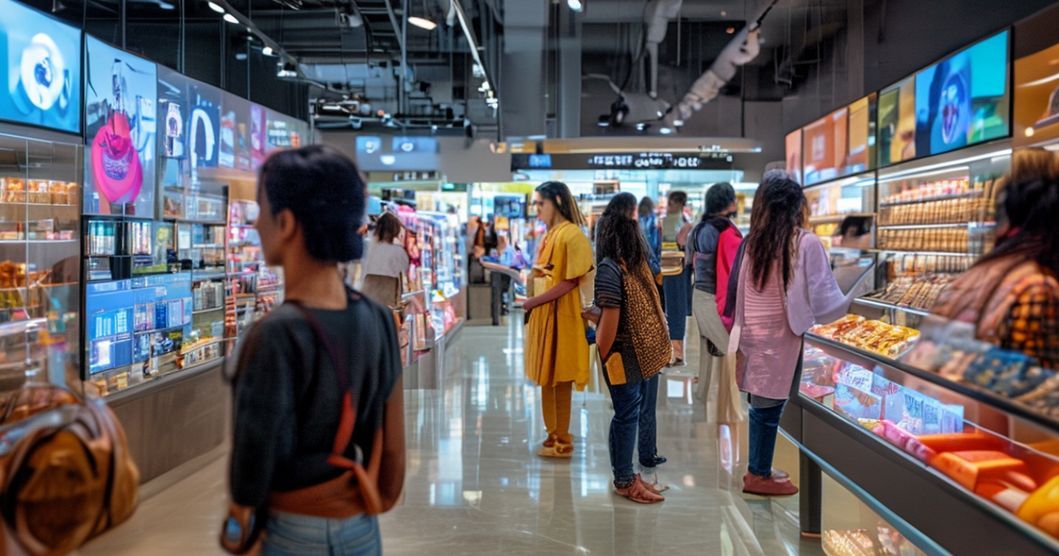
India's retail sector, a behemoth worth over a trillion dollars, is undergoing a profound metamorphosis. For decades, it was predominantly defined by its vast network of kirana stores, bustling marketplaces, and a nascent organized retail segment. However, the dawn of 2026 sees a landscape irrevocably reshaped by digital connectivity, evolving consumer expectations, and a strategic imperative to bridge the gap between the virtual and physical worlds. The buzzword? O2O – Online-to-Offline, or more accurately, the seamless integration of both. This isn't merely a trend; it's the very blueprint for future retail success in India, especially at the hyperlocal level.
The O2O Imperative: Why Integration is Key for Indian Retailers
The Indian consumer of today is digitally savvy, even in Tier 2 and Tier 3 cities. They research products online, compare prices, read reviews, and expect convenience at every touchpoint. Yet, the tactile experience of shopping, the immediate gratification of possession, and the trust built through physical interaction remain deeply ingrained in the Indian psyche. This duality creates a unique opportunity for businesses that can master the O2O synergy. It’s no longer about choosing between an online store and a physical shop; it's about crafting an integrated journey that leverages the strengths of both. Brands that fail to adapt risk losing market share to agile competitors who understand this hybrid approach.
This blend offers several advantages: increased customer engagement, richer data collection, enhanced brand loyalty, and ultimately, higher conversions. It allows retailers to amplify their online reach with a tangible offline presence and enrich the in-store experience with digital convenience.
Pillars of India's O2O Retail Revolution
Achieving O2O mastery in India requires a multi-faceted approach, focusing on several critical pillars:
1. The Seamless Customer Journey: Click, Collect, and Beyond
The modern Indian consumer expects flexibility. Services like 'Buy Online, Pick Up In Store' (BOPIS) and 'Click & Collect' are gaining immense traction, especially in dense urban environments where last-mile delivery can be challenging. This not only offers convenience but also drives footfall to physical stores, creating opportunities for impulse purchases. Reverse logistics, like 'Return In Store' options for online purchases, further enhance the experience, fostering trust and convenience.
2. Hyperlocal Focus and Personalization at Scale
India's diversity demands a hyperlocal strategy. What works in Mumbai might not resonate in Lucknow or Coimbatore. O2O models enable brands to tailor their offerings, promotions, and even store layouts to specific geographic and demographic segments. Data gathered from both online and offline interactions allows for unprecedented personalization, from targeted ads to curated in-store product recommendations.
3. Leveraging In-Store Technology for Enhanced Experiences
Physical stores are evolving from mere transaction points to experiential hubs. Digital screens displaying product information, promotions, or interactive content are becoming commonplace. Smart mirrors, augmented reality (AR) try-ons, and self-checkout kiosks are transforming the in-store journey, making it more engaging and efficient. These technologies bridge the digital-physical divide, providing instant access to information and entertainment that consumers are accustomed to online.
4. Data-Driven Insights for Offline Operations
One of the most significant shifts in O2O retail is the ability to apply data analytics, traditionally associated with e-commerce, to physical stores. Tracking foot traffic, dwell times, purchase patterns, and even customer engagement with in-store digital elements provides invaluable insights. This data empowers retailers to optimize inventory, staff deployment, store design, and marketing campaigns with unprecedented precision, moving beyond intuition to informed decision-making.
5. Building Community and Experiential Retail
Beyond transactions, physical spaces can foster community. Workshops, product demonstrations, pop-up events, and loyalty programs that offer both online and offline benefits create deeper connections. For many Indian consumers, shopping is a social activity, and O2O strategies can amplify this by creating memorable, shareable experiences that drive both online buzz and offline footfall.
Navigating the Challenges in India's O2O Landscape
While the opportunities are vast, the journey isn't without its hurdles. Infrastructure disparities, varying levels of digital literacy across different demographics, and the complexity of integrating disparate systems pose significant challenges. Ensuring a consistent brand experience across all touchpoints, managing inventory seamlessly between online warehouses and physical stores, and training staff for this hybrid environment require substantial investment and strategic planning. However, with India's rapidly expanding digital infrastructure and a burgeoning tech-savvy population, these challenges are being systematically addressed by innovative solutions.
The Road Ahead: Predictions for India's O2O Retail Future
Looking towards the latter half of the decade, we can anticipate several key developments in India's O2O retail space:
- Hyper-Personalization at Scale: Expect more sophisticated use of data to offer truly individualized experiences, both online and in-store.
- Experiential Stores: Physical retail spaces will increasingly become brand experience centers rather than just sales outlets, focusing on engagement over transaction.
- Seamless Payments and Logistics: Further innovations in digital payments and efficient last-mile delivery solutions will solidify the O2O ecosystem.
- Increased Adoption by MSMEs: Smaller businesses and kirana stores, powered by affordable technology solutions, will increasingly adopt O2O strategies to compete effectively.
- Sustainability Integration: O2O models will increasingly incorporate sustainable practices, from ethical sourcing to eco-friendly delivery, resonating with environmentally conscious consumers.
Conclusion: The Measurable Impact of O2O and Adsmunch's Role
India's retail revolution is not about one channel replacing another; it's about intelligent integration, creating a synergistic ecosystem where online and offline amplify each other. The ability to measure the impact of every marketing effort, whether digital or physical, is paramount for success in this evolving landscape. As India's market evolves, the need for integrated and measurable marketing strategies becomes paramount.
For businesses looking to effectively reach consumers in physical spaces, drive engagement, and measure real-world impact, platforms like Adsmunch are proving to be indispensable. Adsmunch, India's first AUTOMATED hyperlocal offline advertising platform, empowers brands to launch ad campaigns in minutes on digital screens within local shops, cafes, gyms, and salons across India. By providing full metrics akin to online ads – plays, scans, CPA, CPI, CPM – Adsmunch brings the precision and measurability of digital marketing to the physical world, all powered by automation and robust data analytics. This innovative platform offers an affordable entry point, starting at just ₹23.75/hour, making it accessible to businesses of all sizes. Furthermore, Adsmunch engages consumers with exciting rewards like QR scan games, coupons, and spin-to-win contests, ensuring ads are not just seen, but actively interacted with. It's about making every offline impression count, engaging consumers, and offering an impactful, fully automated way to thrive in India's new O2O retail era.